Not so long ago, learning a new language meant sitting in a classroom, raising your hand to answer questions, practicing dialogues with classmates, and waiting for your teacher to correct your pronunciation.
Today, those same lessons happen online. Students connect from their homes, coffee shops, offices, or even while traveling. Technology has made language education more accessible than ever before, but it has also introduced an entirely new set of challenges.
In this guide, we'll explore how webinar technology is transforming online language education, what features truly matter, and how your school can create virtual classes that students look forward to attending.

Table of Contents
-
5. Why Webinar Platforms Work Better Than Standard Video Calls
-
6. Essential Webinar Features Every Language School Should Use
-
7. How to Run an Engaging Online Language Class Step by Step
-
9. How LiveWebinar Helps Language Schools Deliver Better Online Classes
-
10. 7 Common Mistakes in Online Language Classes (and How to Avoid Them)
Online language lessons for everyone
Did you know that over 65% of language learners now choose virtual classes as their primary learning format? The shift to digital is no longer just a pandemic workaround — it’s a permanent transformation in language teaching. Webinars and online classes open your school’s doors to students from anywhere, offer flexible scheduling, and significantly lower operational costs.
Success Story: When Warsaw English School pivoted to weekly webinars in 2023, their enrollment tripled within a year, reaching students across Europe — all thanks to interactive, accessible online classes.
Common Challenges in Online Language Classes
If you run a language school or teach languages online, you've probably experienced some of them yourself:
- Students join the lesson but rarely turn on their cameras.
- Participation slowly fades after the first fifteen minutes.
- A few confident learners dominate the conversation while others stay silent throughout the class.
- Technical issues interrupt the flow, attendance becomes difficult to track, and before you know it, you're spending almost as much time organizing lessons as actually teaching them.

How Webinar Platforms Transform Online Language Lessons
This is where webinar platforms are changing the game. Unlike standard video meetings, webinars offer a structured learning environment where engagement, interaction, and lesson management become part of the teaching experience, not additional tasks teachers have to manage manually.
Whether you're running private tutoring sessions, corporate language training, conversation clubs, or a growing online language school, webinars can help you deliver more engaging lessons while saving valuable time behind the scenes.
Top Benefits of Webinars for Language Schools
Learning vocabulary, improving pronunciation, practicing conversations, and building confidence all require constant interaction. Students need opportunities to speak, make mistakes, receive feedback, and collaborate with others. A teacher needs to guide that process naturally, without being distracted by administrative tasks or technical limitations.
This is why more language schools are moving beyond standard meeting software and embracing webinar platforms.
Streamlining Teaching: What You Can Do with Webinar Tools
Imagine welcoming every student with an automated reminder, checking attendance without lifting a finger, dividing learners into breakout rooms for speaking exercises, launching a vocabulary quiz in seconds, sharing interactive grammar examples on a digital whiteboard, and automatically sending the lesson recording after class ends.
Instead of worrying about logistics, teachers can focus entirely on teaching.
Students notice the difference as well. Lessons become more dynamic, more interactive, and more professional. Rather than passively listening, they participate, ask questions, collaborate with classmates, and remain engaged from beginning to end.
Why Webinars Are Transforming Online Language Education
Online education has become the new normal, but many schools still rely on meeting platforms that weren't originally built for teaching.
Teaching a language requires much more than simply speaking over a webcam. Students need opportunities to practice, interact, ask questions, collaborate, and receive immediate feedback.

A webinar platform provides a structured environment where teachers can guide students through every stage of the lesson while keeping participation high. Unlike basic video meetings, webinars allow instructors to:
- organize professional online classrooms,
- manage attendance automatically,
- engage students with interactive activities,
- record lessons for later review,
- schedule recurring classes,
- automate reminders and follow-ups.
As a result, teachers spend less time managing logistics and more time focusing on what matters most—helping students learn.
The Biggest Challenges Language Schools Face Online
Moving classes online has created new opportunities, but it has also introduced several common challenges.
#1. Keeping Students Engaged
One of the biggest issues is maintaining students' attention. Without classroom interaction, many learners become passive listeners instead of active participants. Long lectures quickly lead to distractions, lower retention, and decreased motivation. Interactive webinar tools help prevent this by encouraging continuous participation throughout the lesson.
#2. Encouraging Real Conversation Practice
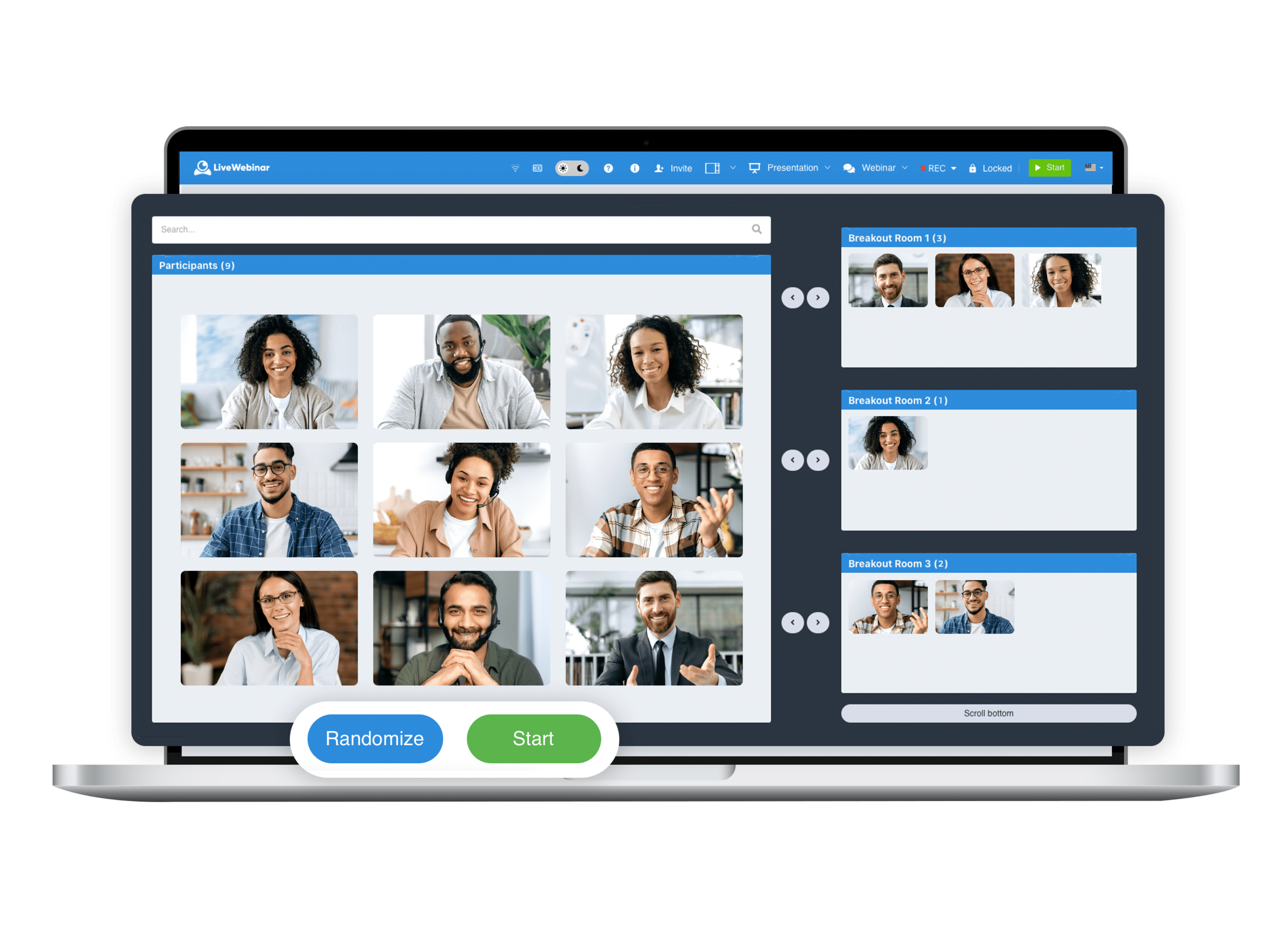
Language learning is built around communication. Unfortunately, many online classes become teacher-centered presentations rather than conversations. Students need regular opportunities to speak, ask questions, and interact with classmates. Features like Breakout Rooms allow learners to practice dialogues and group exercises in smaller teams before returning to the main classroom.
#3. Managing Multiple Groups Efficiently
As schools grow, organizing lessons becomes increasingly complex. Teachers often juggle multiple student groups, different proficiency levels, attendance tracking, lesson recordings, and homework distribution issues. Using separate tools for each task creates unnecessary complexity. A webinar platform centralizes these activities in one place.

#4. Reducing Administrative Work
Teachers shouldn't spend hours sending reminder emails or manually tracking attendance. Automation can handle repetitive tasks such as:
- registration,
- reminders,
- recurring schedules,
- attendance reports,
- follow-up emails.
This saves valuable time while improving the student experience.
Why Webinars Are Transforming Online Language Education
Although many schools started with traditional meeting software, webinar platforms offer several important advantages.
#1. More Interaction

Students remain engaged when they actively participate. Webinar features such as:
- live polls,
- quizzes,
- chat,
- Q&A,
- reactions,
encourage learners to stay involved throughout the lesson.
#2. Better Classroom Organization
Professional webinar software makes it easy to manage registrations, waiting rooms, moderators, recordings, and recurring sessions. Everything is designed around delivering structured online events.
#3. Easy Lesson Recording
Students often appreciate being able to review difficult grammar explanations or vocabulary lessons. Cloud recording allows every class to become a valuable learning resource.
Essential Webinar Features Every Language School Should Use
Choosing the right webinar platform is about much more than video quality. Here are the features that make the biggest difference.
#1. Breakout Rooms
Perfect for: pair conversations, role-playing, speaking exercises, group discussions. Instead of listening passively, students actively practice the language.
#2. Polls and Quizzes
Interactive quizzes provide instant feedback while making lessons more enjoyable. Teachers can quickly check vocabulary knowledge, grammar understanding, or lesson comprehension.
#3. Whiteboard
Visual explanations help students understand complex grammar rules. Teachers can write examples, highlight mistakes, draw diagrams, explain sentence structures.

#4. Screen Sharing
Teachers can easily present textbooks, presentations, websites, videos, exercises, interactive games.
#5. Live Chat
Not every student feels comfortable speaking immediately. Chat allows learners to: ask questions, answer exercises, share ideas, and practice writing.
#6. Cloud Recording
Students can revisit lessons whenever they need extra practice. This is especially useful for exam preparation, revision, and absent students.
#7. Certificates

How to Run an Engaging Online Language Class Step by Step
A successful online lesson begins long before students enter the classroom.
Before the Lesson
Prepare your webinar by:
- scheduling the session,
- creating a registration page,
- sending automated reminders,
- uploading lesson materials,
- testing your microphone and camera.
Good preparation creates a professional first impression.
During the Lesson
Start with an engaging introduction. Use an icebreaker or a simple poll to encourage participation from the very beginning. Throughout the lesson: alternate between explanation and interaction, ask questions frequently, launch polls, divide students into Breakout Rooms, encourage discussion, and use multimedia materials.Keep students active every few minutes.
After the Lesson
Learning shouldn't stop when the webinar ends. Send students: lesson recordings, homework, additional resources, vocabulary lists, follow-up emails. This reinforces learning while maintaining engagement until the next session.
Best Use Cases for Language Schools
Webinars support much more than regular classes.
-
Live Group Lessons - Teach students from anywhere in the world without classroom limitations.
-
Conversation Clubs - Create weekly speaking sessions where students build confidence through real conversations.
-
Grammar Workshops - Offer focused sessions covering specific grammar topics.
#1. Exam Preparation
Prepare students for:
- IELTS
- TOEFL
- Cambridge exams
- TOEIC
#2. Teacher Training
Use webinars internally to train instructors on new teaching methods and digital tools.
#3. Corporate Language Courses
Deliver professional language training to companies with recurring online sessions and attendance tracking.
How LiveWebinar Helps Language Schools Deliver Better Online Classes
LiveWebinar combines everything educators need to create professional virtual classrooms. With LiveWebinar, language schools can:
- schedule recurring lessons,
- automate reminders,
- create branded registration pages,
- host interactive classes,
- organize Breakout Rooms,
- launch live polls,
- share presentations,
- use digital whiteboards,
- record every lesson,
- monitor attendance,
- analyze engagement,
- integrate with CRM and marketing tools.
Whether you're teaching ten students or thousands of learners worldwide, LiveWebinar provides a scalable solution that grows with your school.
7 Common Mistakes in Online Language Classes (and How to Avoid Them)
#1. Talking Too Much - Students learn languages by speaking, not by listening. Encourage interaction throughout every lesson.
#2. Ignoring Student Participation - Ask questions regularly and use polls to keep everyone involved.
#3. Overloading Slides - Simple visuals support learning better than text-heavy presentations.
#4. Not Recording Lessons - Record every class so students can review difficult topics later.
#5. Poor Audio Quality - Clear audio is even more important than high-quality video. Invest in a good microphone and test your equipment before every class.
#6. No Lesson Structure - Every lesson should include an introduction, practice, interaction, summary and homework. Students learn more effectively when lessons follow a predictable structure.
#7. Forgetting Follow-Up - Learning continues after class. Share recordings, additional exercises, and useful resources to reinforce knowledge.
Final Thoughts
Teaching languages online is about much more than simply moving lessons to the internet. The most successful language schools create engaging learning experiences where students actively participate, communicate, and stay motivated throughout their journey.
A professional webinar platform helps make this possible by combining interactive teaching tools, automation, classroom management, and detailed analytics into one seamless environment.
If you're ready to make your online language classes more interactive, organized, and effective, create a free LiveWebinar account today and discover how easy it is to build a virtual classroom your students will love.
FAQ: Webinars & Online Lessons for Language Schools
#1. What is the difference between a webinar and a regular online lesson?
A webinar is a structured, interactive online session designed for group participation, often with tools for polls, breakout rooms, and live Q&A. Regular online lessons may use basic video calls without these advanced features for engagement and class management.
#2. Are webinars suitable for all age groups in language learning?
Yes! Webinars can be tailored for young children, teenagers, or adults. Features like interactive whiteboards, quizzes, and breakout sessions can be adjusted to match the age and skill level of your students.
#3. What equipment do teachers and students need to join a language webinar?
At minimum, a stable internet connection, a computer or tablet, webcam, and a headset or speakers are recommended. LiveWebinar works directly in your web browser, so no downloads are necessary.
#4. Can I record my webinar language lessons?
Absolutely. LiveWebinar allows syou to record the sessions. Recordings are valuable for students who miss class or want to review lessons later.
#6. How do I track attendance and participation in language webinars?
LiveWebnar provides automated attendance reports and engagement analytics. You can see who attended, how long they participated, and even review responses to polls and quizzes.
#7. Is it possible to run both private and group lessons via webinars?
Yes. Webinar technology is flexible, schedule one-on-one tutoring or larger group language classes. Features like breakout rooms make it easy to facilitate both types of lessons.
#8. How secure are online webinar platforms for language schools?
Top webinar platforms employ industry-standard encryption and privacy controls. Always choose a platform that is GDPR-compliant and lets you control who can access your classes
#9. How do I promote my online language webinars to attract new students?
Create a compelling registration page, use testimonials and success stories, and promote your webinars through social media, email marketing, and your school’s website.
#10. How do webinars help language schools grow?
Webinars allow schools to reach students worldwide, automate administrative tasks, improve learning experiences, offer recurring courses, and scale operations without sacrificing teaching quality.
How to Use Breakout Rooms for Business Meetings and Events