Finding the best time for webinars isn’t guesswork — it’s strategy backed by real data. Based on insights from the LiveWebinar State of Webinars 2026 Report, this article reveals when audiences are most likely to register, attend, and stay engaged. You’ll discover which days deliver the highest attendance, what time slots work best across regions, how long your sessions should last, and how often successful companies host webinars. These data-driven tips will help you plan smarter, boost engagement, and make every event count.
Table of Contents
1. From Timing to Trends: What the Latest LiveWebinar Data Really Tells Us
2. How Often Are Webinars Organized?
3. What’s the Best Day to Host a Webinar?
4. What’s the Best Time of Day for a Webinar?
5. How Long Should a Webinar Last?
From Timing to Trends: What the Latest LiveWebinar Report Tells Us
Ever wondered when people are most likely to join your webinar, how long they’ll stay, or which day brings the biggest turnout? We did too.
That’s why our LiveWebinar State of Webinars 2026 Report looked closely at timing, frequency, and audience habits from thousands of online events across the globe. The findings are clear — and they might change the way you plan your next live session.
Let’s look at what the data revealed
Webinars have evolved beyond one-time marketing events — they’re now a consistent way to educate, connect, and sell. But here’s the challenge: your audience’s time is limited. Choosing the right moment to go live can make or break your results.
That’s where data helps. In our 2026 study, we analyzed how often people organize webinars, which days and hours work best, and how long audiences are willing to stay tuned in. Here’s what we found:
How Often Are Webinars Organized?
Webinars have become part of the regular marketing rhythm for most professionals. According to the data:
- 34.41% host webinars several times a month,
- 36.03% hold them once a month,
- and 22.63% go live once a quarter.
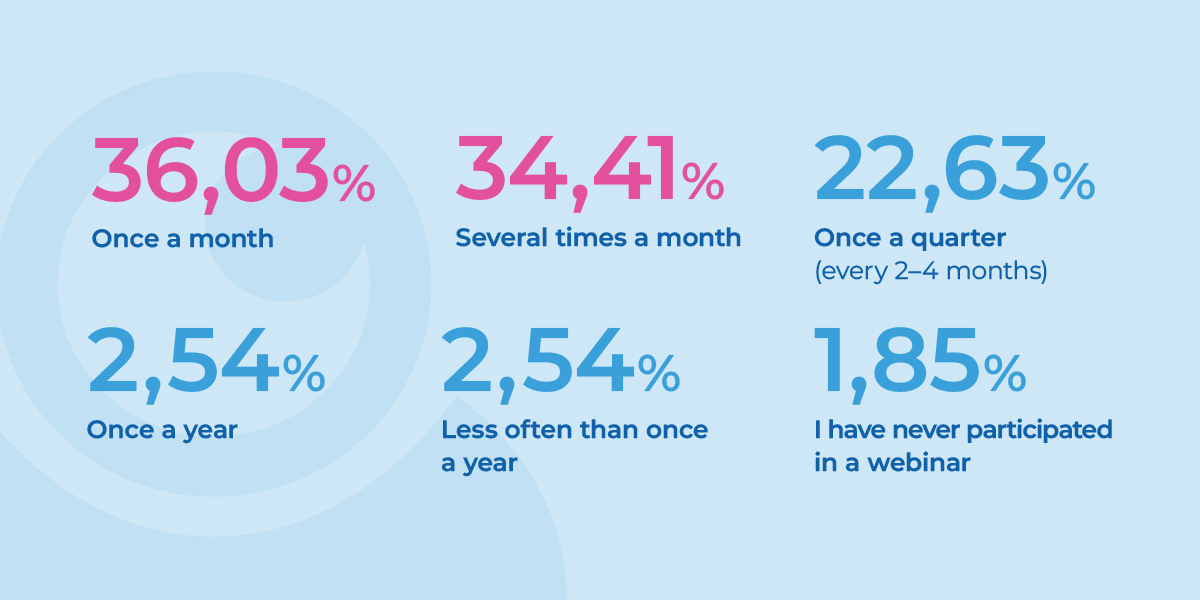
In total, over 70% of organizations organize webinars regularly.
That’s a huge shift from a few years ago — webinars are no longer an experiment, but a proven communication tool.
What This Means for You:
If you’re already running webinars, you’re on the right path. The next frontier is professionalization — refining content, improving promotion, and adding more interactivity. Teams that treat webinars as long-term, recurring events tend to achieve stronger engagement and better sales outcomes.
What’s the Best Day to Host a Webinar?
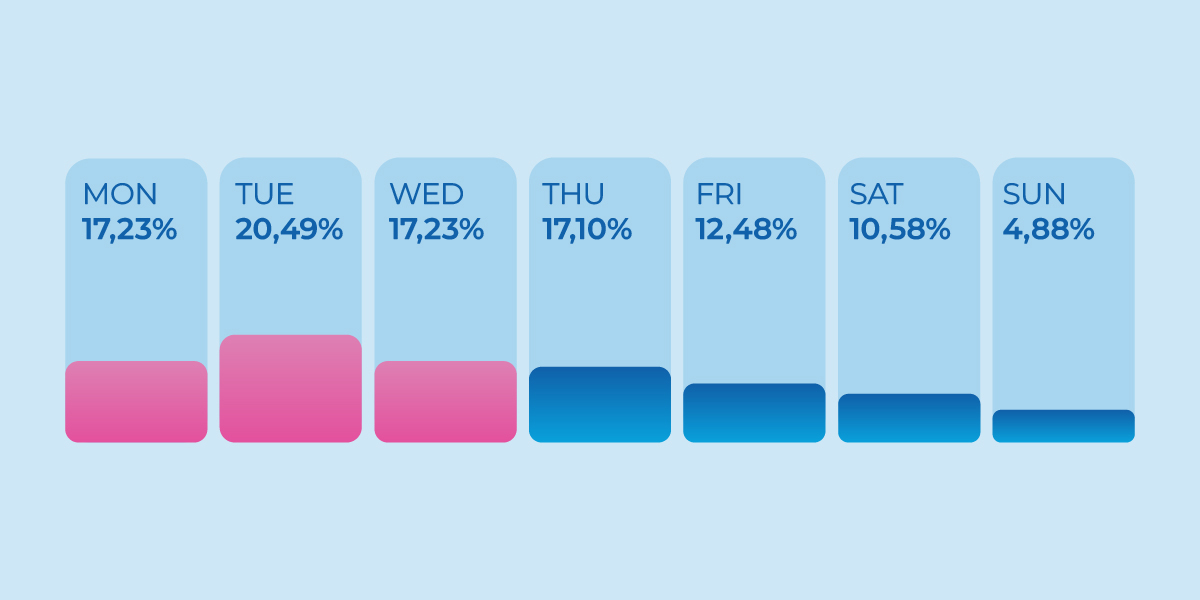
Timing matters, and the data confirms it. The most popular day to host webinars is Tuesday (20.49%), followed closely by Monday (17.23%), Wednesday (17.23%), and Thursday (17.10%).
Tuesday is the sweet spot
Mid‑week sessions tend to perform best because audiences are focused and in work mode — Monday catch-ups are done, and Friday fatigue hasn’t yet hit.
Meanwhile, weekend webinars are clearly less effective:
- Friday – 12.48%
- Saturday – 10.58%
- Sunday – 4.88%
When in doubt, stick to weekdays — especially Tuesday or Wednesday — to get the most engaged audience.
What’s the Best Time of Day for a Webinar?
You might guess mornings are better — and you’d be right. According to the data:
- 8:00–11:00: 28.47%
- 11:00–13:00: 24.47%
- 19:00–22:00: 17.65%
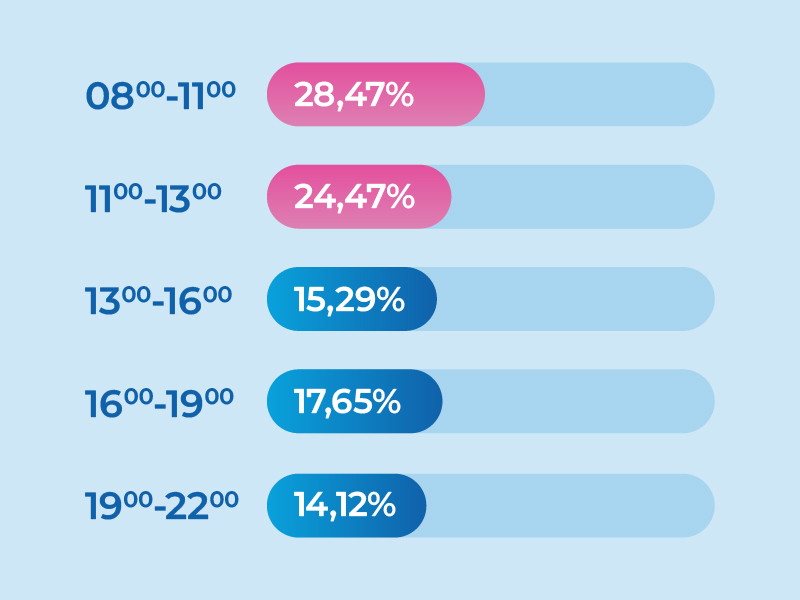
Mornings win, hands down. These early hours capture attention before inboxes overflow and meetings take over the day.
Late mornings are a great middle ground — they work across time zones and maintain solid participation rates.
Evening sessions can also work well for educators and global events, where people join after work hours.
Pro Tip:
If you run international webinars, test late‑morning slots. They’re flexible, accessible across different time zones, and perform consistently well.
Read more in our other blog post.
How Long Should a Webinar Last?
Shorter is better. Here’s what audiences told us:
- Up to 30 minutes: 12%
- 30–45 minutes: 37.18%
- 45–60 minutes: 32.24%
- Over 60 minutes: 18.59%
Most participants prefer the 30–45‑minute range — long enough to deliver useful insights, short enough to stay interesting.
Why This Matters:
Attention spans are shrinking. And in an era of AI‑generated content and information overload, clarity beats length.
If you can deliver focused, actionable value in under an hour, your audience will thank you — and stay longer next time.
Which Webinar Types Perform Best?
Our report shows that educational and training webinars still dominate. People want to learn first, buy later — and brands that focus on teaching rather than selling tend to build stronger trust and retention.
Use the power of education. Whether it’s a case study walkthrough, a hands-on training session, or an expert discussion, the goal is to make your audience smarter. Once that happens, conversion naturally follows.
Building a Webinar Rhythm — Consistency Is Key
Hosting great webinars isn’t about doing one perfect event. It’s about consistency.
The data clearly shows that recurring webinars — monthly or more often — help maintain visibility and nurture long-term relationships.
Use LiveWebinar’s scheduling, reminders, and analytics to plan, test, and improve your rhythm over time. The platform helps you find what works best for your unique audience — every single time.
Key Takeaways
Here’s your data-driven checklist for better webinar engagement:
- Host regularly — at least once a month to stay top of mind.
- Pick mid‑week — Tuesday or Wednesday brings the best turnout.
- Go live in the morning — energy and focus are highest early in the day.
- Keep it short — 30‑45 minutes is the sweet spot.
- Educate first — knowledge builds trust and conversion naturally.
Small changes to your schedule can have a big impact on sign‑ups, engagement, and outcomes.
Sign up for a free LiveWebinar account and start hosting webinars that show up exactly when your audience does.
Automated Webinar Software That Goes the Extra Mile for You